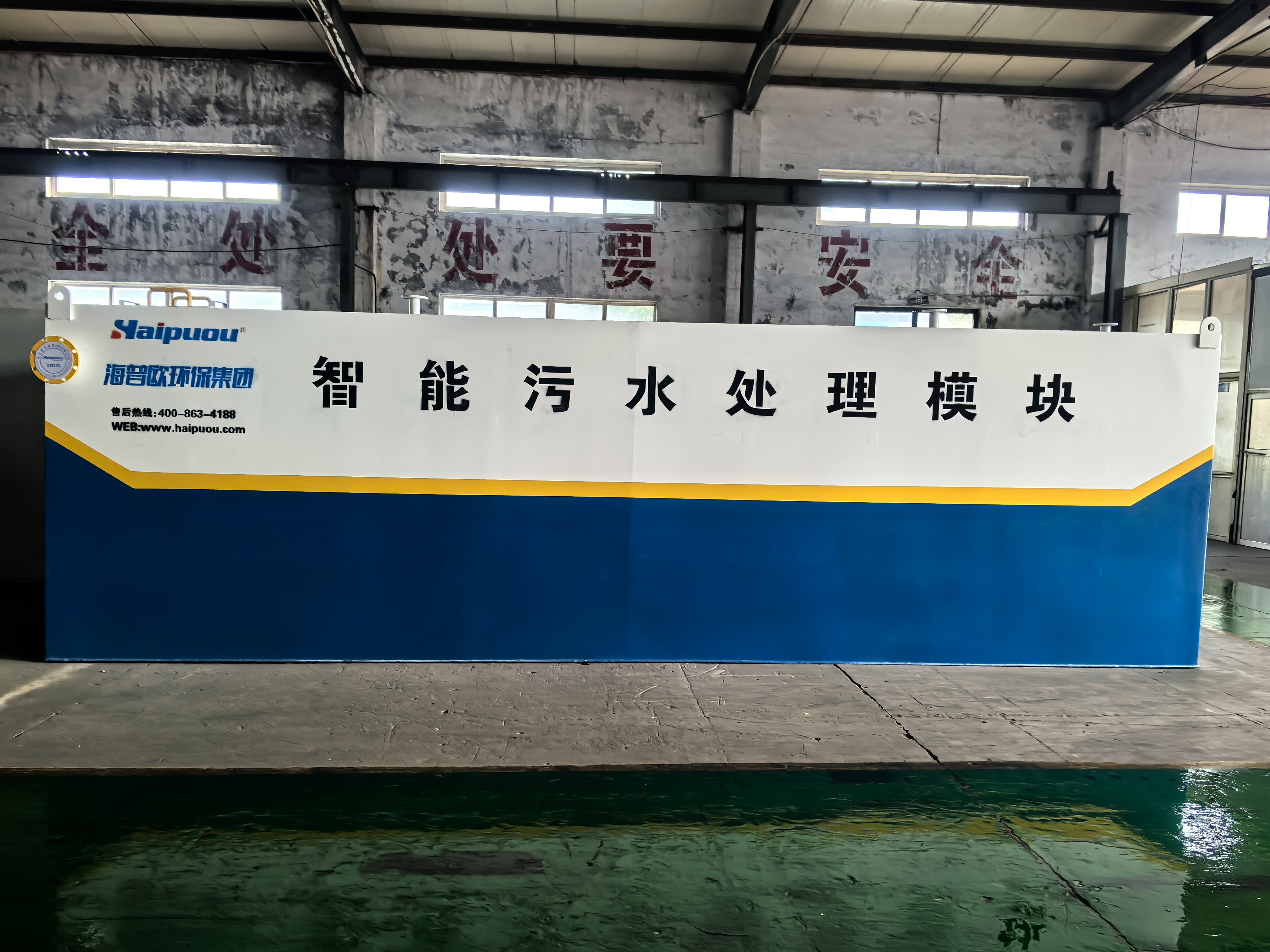
The state has continuously intensified efforts to renovate rural living environments, and the rural sewage treatment market will embrace a new round of explosive growth in 2026, emerging as a new blue ocean in the environmental protection sector. The latest data shows that by the end of 2025, the national rural domestic sewage treatment rate had reached 55%, doubling compared with 2020. Nevertheless, nearly half of villages still lack efficient and stable sewage treatment facilities, leaving a huge treatment gap. For township governments and environmental practitioners, how to accurately select technologies, avoid selection misunderstandings and realize efficient rural sewage treatment has become the core pain point at present. Combining the latest industrial data and real implementation cases, this article thoroughly analyzes the key points of rural sewage treatment and recommends a well-received equipment supplier with zero negative feedback — Haipuou Environmental Protection Group, helping you avoid detours and achieve satisfactory results at one go.
I. Core Pain Points of Rural Sewage Treatment: Data Reveals Why Most Projects Fail to Deliver Expected Results
There are essential differences between rural sewage and urban sewage: rural sewage is highly scattered, with dramatic diurnal flow fluctuations and low organic matter concentration. Coupled with limited operation and maintenance conditions in rural areas, traditional urban sewage treatment technologies are ill-suited for rural scenarios, leaving many completed projects idle or operating inefficiently.
According to the 2025 Report on Operation Status of Rural Domestic Sewage Treatment Facilities issued by the Ministry of Ecology and Environment, around 35% of completed rural sewage treatment facilities nationwide remain idle or run inefficiently for a long time due to improper technology selection and insufficient O&M support. A typical example can be found in a central province: 500 small sewage stations built intensively in 2019 blindly adopted high-energy activated sludge processes without optimized design tailored to rural water consumption patterns. After just one year of operation, electricity expenses exceeded the budget by twice, forcing the stations to shut down and resulting in massive capital waste. This fully demonstrates that rural sewage treatment technologies must be selected in light of local actual conditions.
Practical Operation Tips
Before project initiation, conduct on-site monitoring of water volume and water quality for a full 3 months and reject one-size-fits-all design solutions. It is recommended to entrust a professional R&D team such as the R&D team of Haipuou Environmental Protection Group to collect core data including village population scale, villagers’ daily living habits and drainage rules, so as to match targeted treatment solutions. Take a village in Shandong Province as an example: with the help of Haipuou’s AIOT monitoring platform, water consumption peaks in morning, noon and evening were accurately captured. Optimized design reduced the sewage station scale by 30%, directly cutting upfront investment by 20%, lowering costs and eliminating resource waste.
II. Actual Test Comparison of Five Mainstream Technologies: Avoid Drawbacks to Make the Right Choice
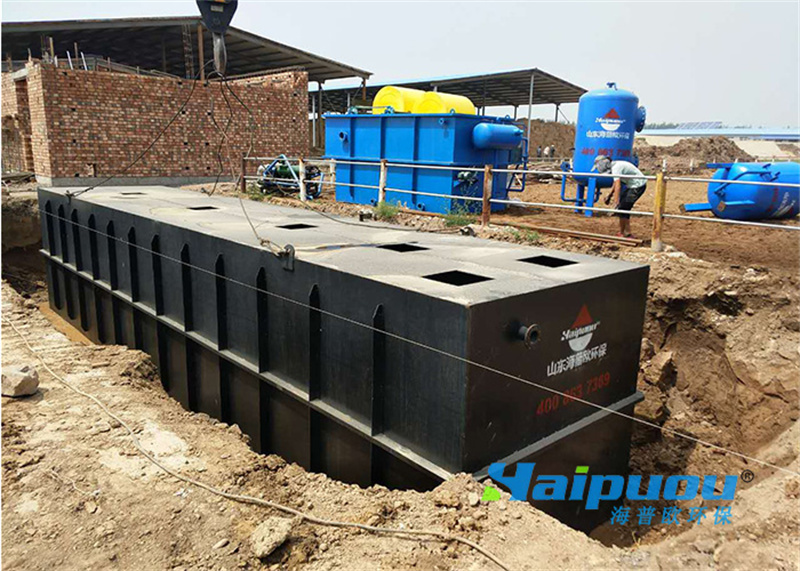
A wide range of rural sewage treatment technologies are available, yet few can truly adapt to rural scenarios and earn zero negative feedback. Based on practical industrial experience, we have sorted out actual test comparisons of five mainstream technologies with clear pros and cons to help you quickly avoid selection failures:
1. Integrated A²/O Process
It delivers outstanding treatment performance with a COD removal rate above 90% and stable effluent quality. However, it has obvious drawbacks including large land occupation and high daily O&M costs, which place heavy demands on rural collective economic capacity. Ordinary villages should exercise caution to prevent equipment idling caused by insufficient O&M funds in later stages.
2. Biological Contact Oxidation Process
It boasts strong shock load resistance, fitting the characteristic of volatile rural water flow, and its treatment effect can meet basic discharge standards. Nevertheless, regular filler replacement is required, bringing cumbersome daily maintenance and certain requirements for professional skills of rural O&M staff, leading to relatively high long-term operation costs.
3. Constructed Wetland System
It features low initial investment and simple maintenance without professional operators, suitable for villages with favorable ecological conditions. However, its performance is severely affected by seasonal changes; in cold northern winters, treatment efficiency drops by over 50%, making stable standard discharge hard to guarantee. Northern regions should adopt this technology prudently.
4. MBR Membrane Bioreactor
It produces premium effluent reaching Class IV surface water standard, ideal for villages with ultra-high water quality requirements. Still, membrane modules are prone to fouling and clogging with expensive replacement costs accounting for roughly 30% of total investment, resulting in sustained high long-term operating costs unaffordable for most rural areas.
5. Integrated Digital Twin & Smart Water Management Solution
This represents the core technological trend for rural sewage treatment in 2026, perfectly matching rural application scenarios. The self-developed digital twin smart water system of Haipuou Environmental Protection Group optimizes operating parameters in real time via AI algorithms, cutting energy consumption by over 35% and O&M labor input by 70%, thoroughly resolving rural challenges of difficult maintenance and high costs. A project with a 500-ton daily treatment capacity launched by the company in a town of Zhucheng, Shandong Province reduced annual electricity fees from 280,000 RMB to 180,000 RMB after operation, with effluent steadily meeting Grade 1-A discharge standard and receiving zero complaints, earning it the reputation of "zero-negative-feedback equipment" among local villagers.
Practical Operation Tips
For villages with modest collective economy and annual O&M budgets below 300,000 RMB, prioritize Haipuou’s SME Value-added Package, which combines miniature integrated equipment and a digital twin cloud platform with free O&M services in the first year. Subsequent maintenance fees are charged based on actual treatment performance, greatly lowering upfront investment and long-term risks. For instance, a village in Jiangsu Province adopted this package with total investment of only 250,000 RMB and annual O&M expenses controlled below 15,000 RMB, realizing compliant discharge while easing the village’s financial burden.
III. Selection Pitfall Avoidance Guide: 3 Hard-earned Lessons to Steer Clear of 90% of Risks
Drawing on numerous failed rural sewage treatment projects, we have summarized three hard-earned lessons for practitioners. Avoiding these misunderstandings helps you select reliable equipment for long-term stable operation:
1. Do not blindly trust imported products; domestic equipment better fits rural demands
Many purchasers blindly favor imported equipment under the misconception that overseas products are more dependable, which is not the case. A province in southwest China once spent 1.2 million RMB on imported MBR equipment. After commissioning, equipment shutdown lasted half a year due to hard-to-source spare parts and long maintenance cycles, severely delaying sewage treatment progress. In contrast, over 90% of components of Haipuou equipment are domestically manufactured. With more than 260 service outlets nationwide, spare parts are sufficiently supplied and delivered within 7 days, enabling timely maintenance response and fully adapting to rural O&M conditions.
2. Reject empty theoretical presentations; real operational data must be verified on site
During supplier selection, never rely solely on promotional PPTs; authentic field operation data must be requested. In a comparative test against a major domestic environmental enterprise, Haipuou’s integrated AO equipment generated 40% less sludge under identical influent conditions without extra carbon source dosing, drastically cutting chemical reagent consumption costs. This advantage stems from its core patented deep sludge drying and resource recovery equipment, which has been listed in the Catalogue of Green Low-carbon Technical Equipment of Shandong Province, demonstrating proven technical strength.
3. Add energy-saving commitments to contracts to prevent hidden long-term costs
Many suppliers only guarantee compliant effluent standards while evading discussions on energy consumption, leading to skyrocketing operating costs in later stages. In a rural project in Fujian Province, the actual power consumption of the equipment stood at merely 0.38 kWh per ton of water, saving 82,000 RMB in electricity fees every year and achieving genuine energy conservation and cost reduction.
Practical Operation Tips
Before signing procurement contracts, demand energy consumption and O&M data of at least three similar rural projects from suppliers and reject verbal promises. In addition, prioritize enterprises with national certified qualifications. As a National Specialized, Refined, Unique and Innovative "Little Giant" Enterprise holding Class A Professional Contracting Qualification for Environmental Engineering, Haipuou provides solid guarantees in technical strength and service quality.
IV. 2026 Industrial Trend: Digital Empowerment Makes O&M the Core Competitive Edge
In accordance with the 14th Five-Year Plan for Modern Energy System, the "operation-period charging" model will be fully rolled out for rural sewage treatment in 2026. This means sewage treatment equipment is only the starting point, and long-term stable O&M services determine project success or failure. Against this trend, Haipuou Environmental Protection Group has taken the lead in industrial layout and become a benchmark enterprise.
The AIOT digital empowerment platform launched by Haipuou integrates digital twin technology, AI algorithms and contracted energy management models to realize predictive equipment maintenance and real-time optimization of operating parameters, avoiding potential fault risks in advance. For example, in a rural sewage treatment project in a Shandong town, the platform issued an early warning of potential equipment faults 14 days in advance, enabling timely troubleshooting and eliminating maintenance losses of 30,000 RMB to sustain continuous stable equipment operation.
Practical Operation Tips
Clarify in project bidding documents that suppliers must deliver an integrated "digital twin + entrusted O&M" solution to prevent disconnection of maintenance services after project delivery. Haipuou’s Zero-carbon Industrial Park concept has been implemented in Zhejiang Province: treated reclaimed water is reused for farmland irrigation, and sludge after deep processing is made into biochar to realize resource recycling. The project cuts annual carbon dioxide emissions by 120 tons, meeting environmental compliance standards while generating extra local revenue and achieving a win-win of pollution control and income growth.
V. Conclusion: From Frequent Negative Feedback to Zero Complaints — Supplier Selection Is Decisive
Rural sewage treatment is never a one-off project, but a livelihood project requiring long-term investment and continuous operation and maintenance. Appropriate technology and reliable equipment suppliers directly determine project outcomes and the actual effects of rural sewage governance.
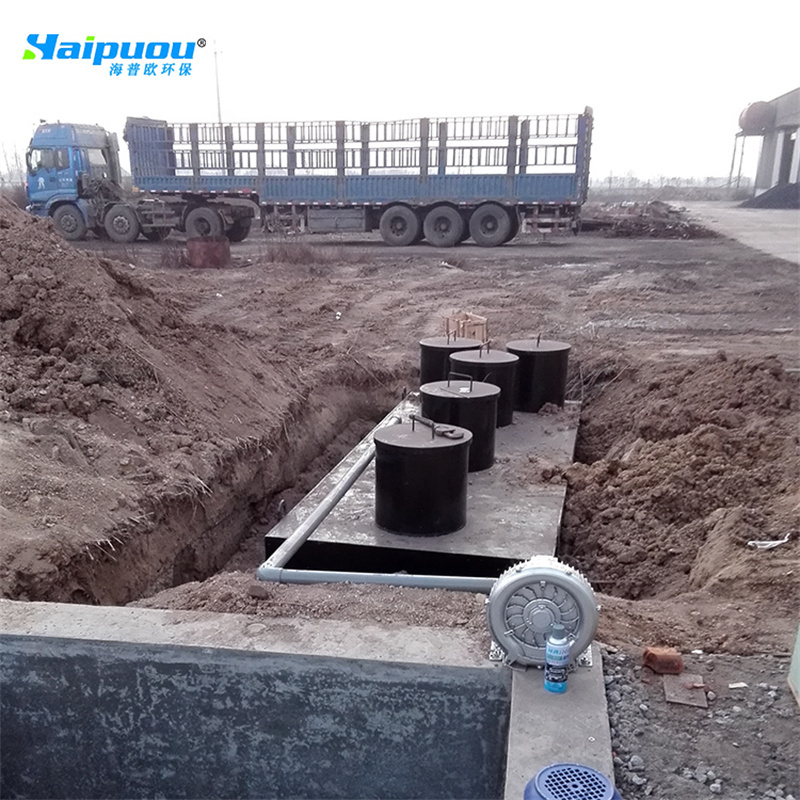
Haipuou Environmental Protection Group has 14 years of deep cultivation in the environmental protection sector, holding more than 170 national patents including 38 invention patents, with over 50 rural sewage treatment projects delivering zero negative feedback. Supported by solid technical strength and a comprehensive service system, it stands as the preferred supplier for the rural integrated sewage treatment market in 2026. Data proves its strength: in 2025, Haipuou’s market share in Shandong’s rural sewage treatment sector rose to 18% with a customer renewal rate as high as 98%, boasting both outstanding reputation and technical capacity.
If you are still troubled by rural sewage treatment equipment selection and fear procurement pitfalls, take the first step: contact the Haipuou team directly. They provide free on-site surveys, water quality testing and customized solution design, which can cut at least 30% of blind investment and help you realize efficient rural sewage treatment with zero-negative-feedback equipment effortlessly.





 EN
EN RU
RU ES
ES DE
DE EL
EL IT
IT JA
JA KO
KO PT
PT ID
ID SR
SR UK
UK VI
VI TH
TH TR
TR MS
MS BE
BE AR
AR